Sunday Best – February 15, 2026
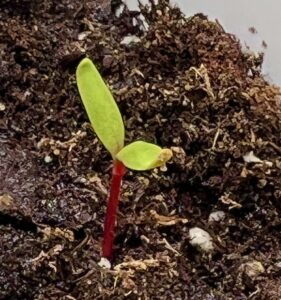
Poetry lifts the veil from the hidden beauty of the world. – Shelley
I’ve been experimenting with some new habits and rituals lately, and the one that has had the most immediate “return on time” is deceptively simple. Instead of starting the morning by scrolling email or headlines before my feet even hit the floor, I start the day with a poem. On paper. My selections are brief, so this takes all of three minutes.
Friends, it is transformative. First, the day is magically expanded. Three minutes feels like three hours. Second, my experience is heightened. In that liminal state first thing in the morning, the poems read differently, somehow both clearer and more mystical. Third, my productivity on tasks that follow is vastly higher. The expansive creative space of night is extended, a natural on-ramp to the ever-elusive “flow state” we all crave.
This has me asking, why did these three minutes initially seem so impossible to spare? What might arise if I continue this practice for months or years to come? Where are there other chances for tiny investments with such huge benefits?
Dear ones, so much in life is beyond our control, or even our influence. But we all have three minutes, sometime.
What might be transformed?
With thanks to many friends who have encouraged this direction – Heather, Anne, Bill, Tricia, and more. A recent gift of a Poetry Prescription helped to jumpstart this practice. And the idea of morning and evening minutes is informed by the terrific work of Pilar Gerasimo and Brian Johnson, both luminous sources of deep wisdom.
Sunday Best – February 8, 2026
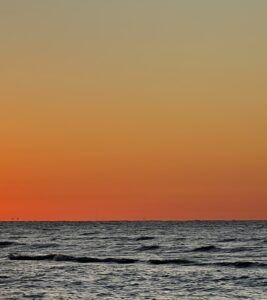
It’s been a couple weeks now since the big eastern US snowstorm, but I’d swear that each original flake is still here, plus lots of their friends. Every outing is a tiny adventure.
The other day as I tromped home from the grocery store with my overflowing bags, I hit a patch of ice and found myself suddenly airborne. Then I skidded on my knees across an alleyway full of potholes, surrounded by flying blueberries. Friends, it was not elegant.
Before I could even register what had happened, three construction workers dropped the heavy materials they were carrying and rushed to help me up. Another passerby retrieved my scattered groceries and bundled them together, before I had even arisen.
The next day, a kid in front of me went sliding across the pathway at the park, and all who were near ran to them, as automatically as the kid’s own family. At the next corner, a man hesitated at the particularly blocked-up intersection, and two others easily took his arm to help him cross as the traffic waited, miraculously honk-free.
Dear ones, we will all find our feet swept out from under us at times.
May we be surrounded by helpers when we stumble.
May we rush to cushion others as they slide.
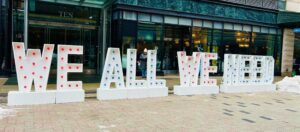
Sunday Best – February 1, 2026
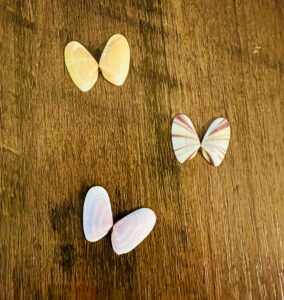
Happy St. Brigid’s Day! As we arc towards the springtime, current temperatures be darned, I’ve confirmed plans to spend more time outdoors this year.
This intention, plus the headlines on any given day, have me returning yet again to the Wendell Berry poem below. I cannot count the number of times I have taken shelter in the image of “the day-blind stars waiting with their light.”
Accompanying this grace of the world, and sometimes even more important to me, is the wonder that can so easily be accessed through our earthly places and fellow beings. Monarchs fly 3000 miles on those paper-thin wings during their migrations, with precision that would make any GPS system spark green with envy. Honeybees, paper wasps, and squishy sea creatures all craft homes from proteins made by their own bodies, while illuminating the most beautiful math in the universe. Mangroves turn salt water into fresh. Narwhals exist.
Dear ones, right this minute, things may seem cold and dark, both literally and metaphorically.
And yet.
The Peace of Wild Things, by Wendell Berry
When despair for the world grows in me
and I wake in the night at the least sound
in fear of what my life and my children’s lives may be,
I go and lie down where the wood drake
rests in his beauty on the water, and the great heron feeds.
I come into the peace of wild things
who do not tax their lives with forethought
of grief. I come into the presence of still water.
And I feel above me the day-blind stars
waiting with their light. For a time
I rest in the grace of the world, and am free.
A collection of Berry’s writing that includes this poem can be found here, and a terrific OnBeing conversation with Krista Tippett and Ellen Davis, featuring Berry’s poetry, can be found here.
Sunday Best – January 25, 2026
I was driving behind a car the other day covered in bumper stickers declaring our world to be a Matrix-like fiction. And indeed, depending on the news of the day, this is sometimes an appealing proposition.
To me a more fruitful exercise is to look around and ask “what if?” Usually I ask this in a hopeful, future-looking way, but lately I’ve had the chance to consider it retrospectively as well.
What if my first boss had flipped past my flimsy undergrad resume in the recruiting book, instead of giving me a chance?
What if that CEO did not go out of his way to teach me all about his business, when my only qualification was being sincerely curious?
What if I’d stayed and not left? What if I’d left and not stayed?
What if my friends and family had not kept faith in our connections, through all those years of business trips and conference calls and half-holidays and missed get-togethers?
For each of us, the what-if’s are endless, interesting to consider but impossible to assess.
How lucky to recognize that the path actually taken has been full of tremendous blessings, things that effort could never earn.
Dear ones, let us awaken to the wonder of our lives.
For Celebration
John O’Donohue
Now is the time to free the heart,
Let all intentions and worries stop,
Free the joy inside the self,
Awaken to the wonder of your life.Open your eyes and see the friends,
Whose hearts recognize your face as kin,
Those whose kindness watchful and near,
Encouraging you to live everything here.See the gifts the years have given,
Things your effort could never earn,
The health to enjoy who you want to be
And the mind to mirror mystery.
Sunday Best – January 18, 2026
In the heart of winter in New England, it’s easy to fall into a habit of time traveling. I can spend hours in seed catalogs, or online travel planning, or lost in my own far-flung thoughts – anything to skip over the grey, cold here and now.
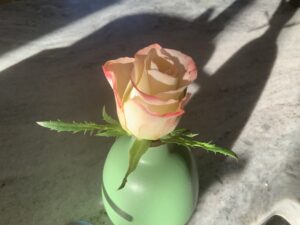
This season I’m aiming to skip ahead a little less, even when the here and now is wintry. Instead of screen time to start the day, I’ve been sitting still with my morning tea. Even a minute of quiet un-plugged-ness feels like forever, which is kind of the point. One day this week a sneaky early morning sunbeam pierced the clouds and lit up my tabletop with the most beautiful golden light…. And then faded away, all in the blink of an eye.
Dear ones, it’s hard to sit still, especially in the cold and the dark. But if we scroll past the clouds, we miss the sunbeams too.