Sunday Best – November 1, 2026
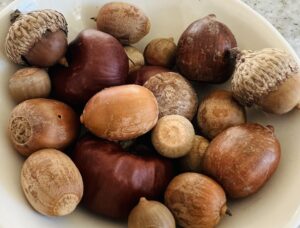
The creation of a thousand forests is in one acorn. – Emerson
This week I’ve been thinking a lot about compounding, and how poorly equipped our little human brains are to appreciate it. Partly it’s the geometric math that’s involved, sometimes it’s a stretched-out time horizon, and occasionally it’s a misplaced “bird in the hand” mindset that pushes us toward more immediate rewards. Whatever the reasons, compound effects tend to sneak up on us.
On Monday I noticed that a stock I’d owned for a long time, one that was never a headlines-grabbing winner, had slowly accrued to be a top performer. On Tuesday I met some longtime friends for lunch, where all of our conversations about nothing in particular have formed decades-long, deep ride-or-die loyalties. On Friday I strolled through the stunning autumn display of Boston’s Public Garden, where today’s visitors are enjoying the decisions made by strangers, centuries before us.
Any of these compounders could have taken another turn. The initial decisions might have been deferred, or the ongoing growth could have been interrupted. Yet what strikes me is the relative ease of each stage: a modest initial effort, with even more modest upkeep over time, leading to tremendous rewards.
So, dear friends, this weekend, I’m planting daffodils, and acorns.
Imagine the landscape to come.
Sunday Best – October 25, 2026 (and an invitation!)
Philosophy begins in wonder. – Plato
Some times are just wonder-ful.
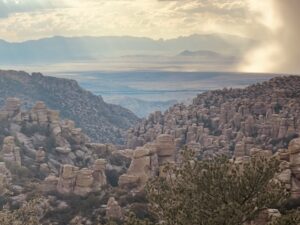
This past week had its share of tasks and tedium, but also an extra dose of wonder. The otherworldly rock formations of our newest national park. The sound of young musicians tuning up before their concert. The joy of birthday songs and cake with loved ones. The spark of new ideas connecting in my brain. The surprise of a rainbow in the desert after a powerful thunderstorm. The very fact that we can breathe or see or walk or think.
Once I notice one thing, the wonders seem to multiply. They are crowded all around, waiting in plain sight.
Dear ones, may our senses be tuned to the wonders that surround us.
An invitation for Boston-area friends:
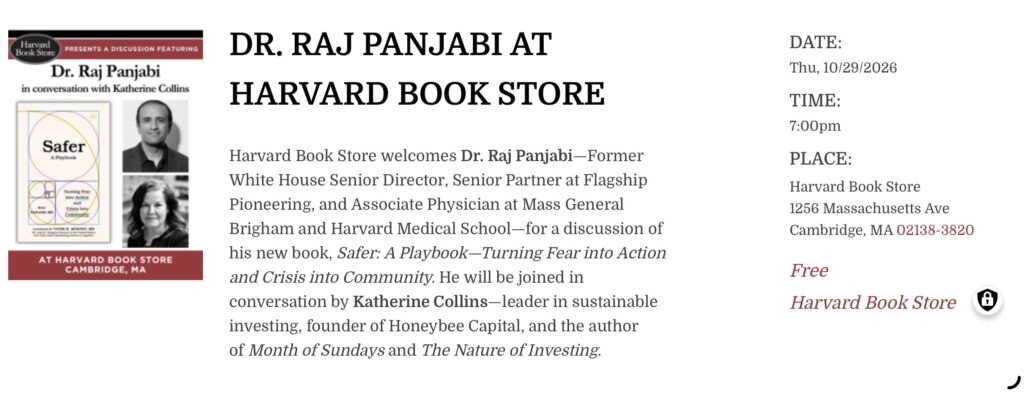
Please join me and the amazing Dr. Raj Panjabi for a discussion of his new book, Safer, at the Harvard Book Store on October 29. Raj is a principled leader and a compassionate human, and this book offers a range of thoughtful approaches for navigating our uncertain world. We’d love to see you there!
Sunday Best – October 18, 2026

What makes the desert beautiful is that somewhere it hides a well.
– Antoine de Saint-Exupéry
Friends, our lives are full of tough exteriors – and yet we know what can lie within. Scowls can turn soft with the appearance of a child. A not-quite-plumb porch can shelter a cozy reading nook. A barren landscape can burst into bloom with just a few drops.
Dear ones, we all know there are wells hidden in the desert.
May we see them.
May we be them.
Sunday Best – October 11, 2026

It is the 800th anniversary of the death of St. Francis, a special Jubilee year. My catechism lessons ended some time ago, so I took this chance to review the Prayer of St. Francis, also one of the most popular hymns of my childhood. In hymn form it can be a little swoopy and saccharine, but in written form these words took on new resonance. Here is a prayer not for God to change the whole world to our liking, but rather to change ourselves, to make us instruments of peace and hope and light.
Dear ones, what will we sow today?
Prayer of St. Francis of Assisi (Prayer for Peace)
Lord, make me an instrument of your peace:
where there is hatred, let me sow love;
where there is injury, pardon;
where there is doubt, faith;
where there is despair, hope;
where there is darkness, light;
where there is sadness, joy.
O divine Master, grant that I may not so much seek
to be consoled as to console,
to be understood as to understand,
to be loved as to love.
For it is in giving that we receive,
it is in pardoning that we are pardoned,
and it is in dying that we are born to eternal life.
Photo from the current Boston MFA exhibit, Picasso, Miro, Dali: Unbound. Highly recommended!
Sunday Best – October 4, 2026
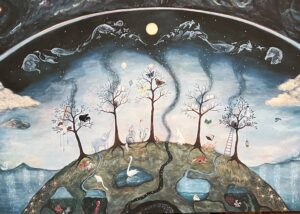
I’ve set several intertwined goals this past year, all related to rekindling wonder and connection. More time outside, more books on paper, more art and poetry… and sometimes these activities come bundled into one handy package!
The new book Ocean of Stars is composed of lyrical writing by Azita Ardakani and glorious illustration by Rebecca Rebouche (pictured above). At a book event this week, Azita noted that it is so unlikely that we exist at all. What would it be like if we lingered in that miracle once in a while?
We are made of stardust; it’s both poetic and true.
Science and poetry, wisdom and wonder.
The afterword highlights how stories can offer a form of homecoming:
To remember is not to retrieve something lost. It is to come home, again and again, to the mystery that has been here all along, patiently waiting for us to notice and to shine once more
Dear ones,
shine on.
Here are the links to find Ocean of Stars at Amazon or your favorite independent bookstore.
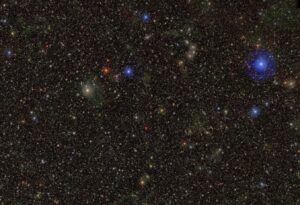
And, Ocean of Stars is also the name of a stunning image from the Vera Rubin Observatory, which can be seen in crystal clear resolution here (and in blurrier form below).